Enterprise Service Platform
Research • UX Design • Enterprise Systems • 2022
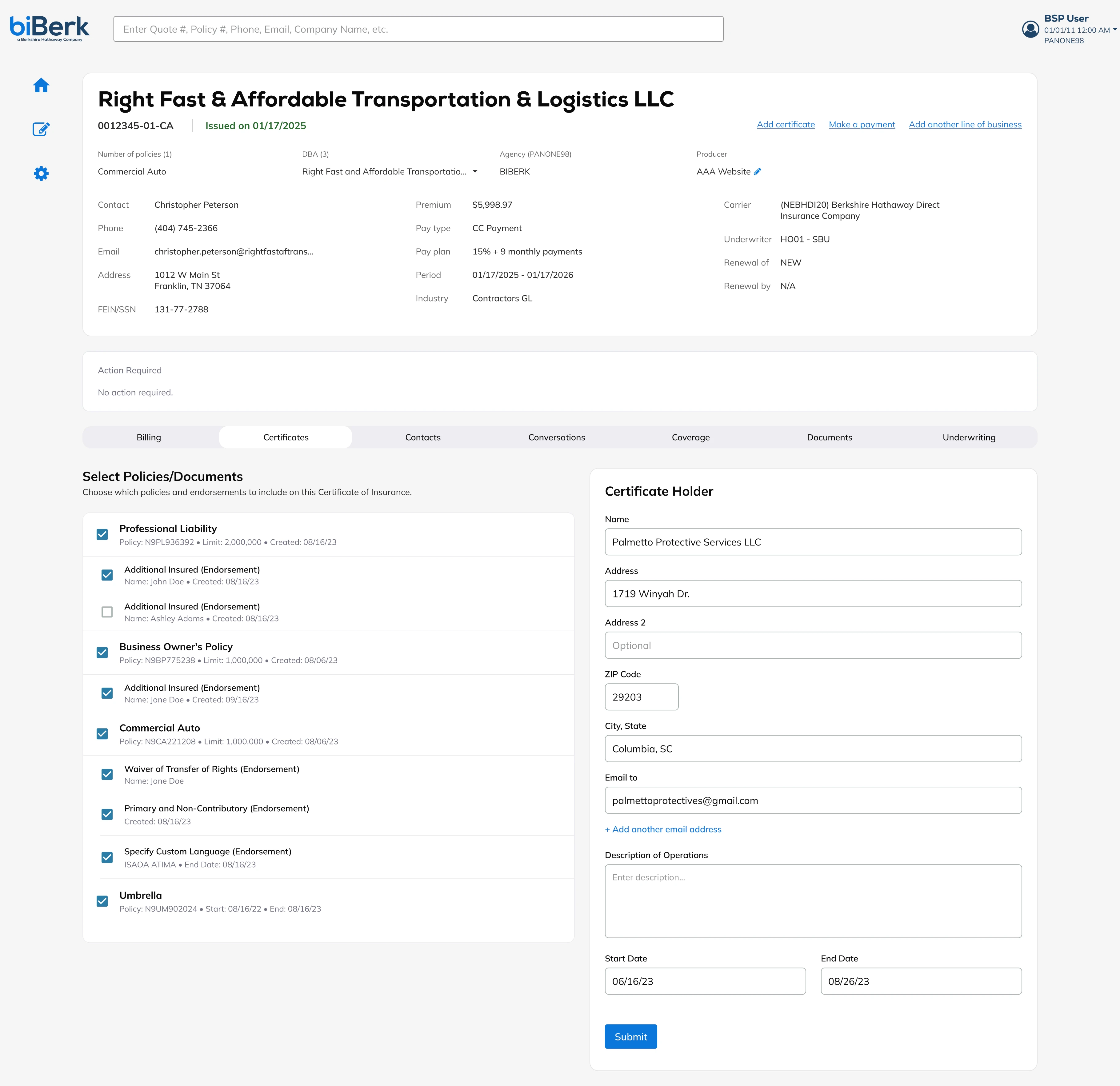
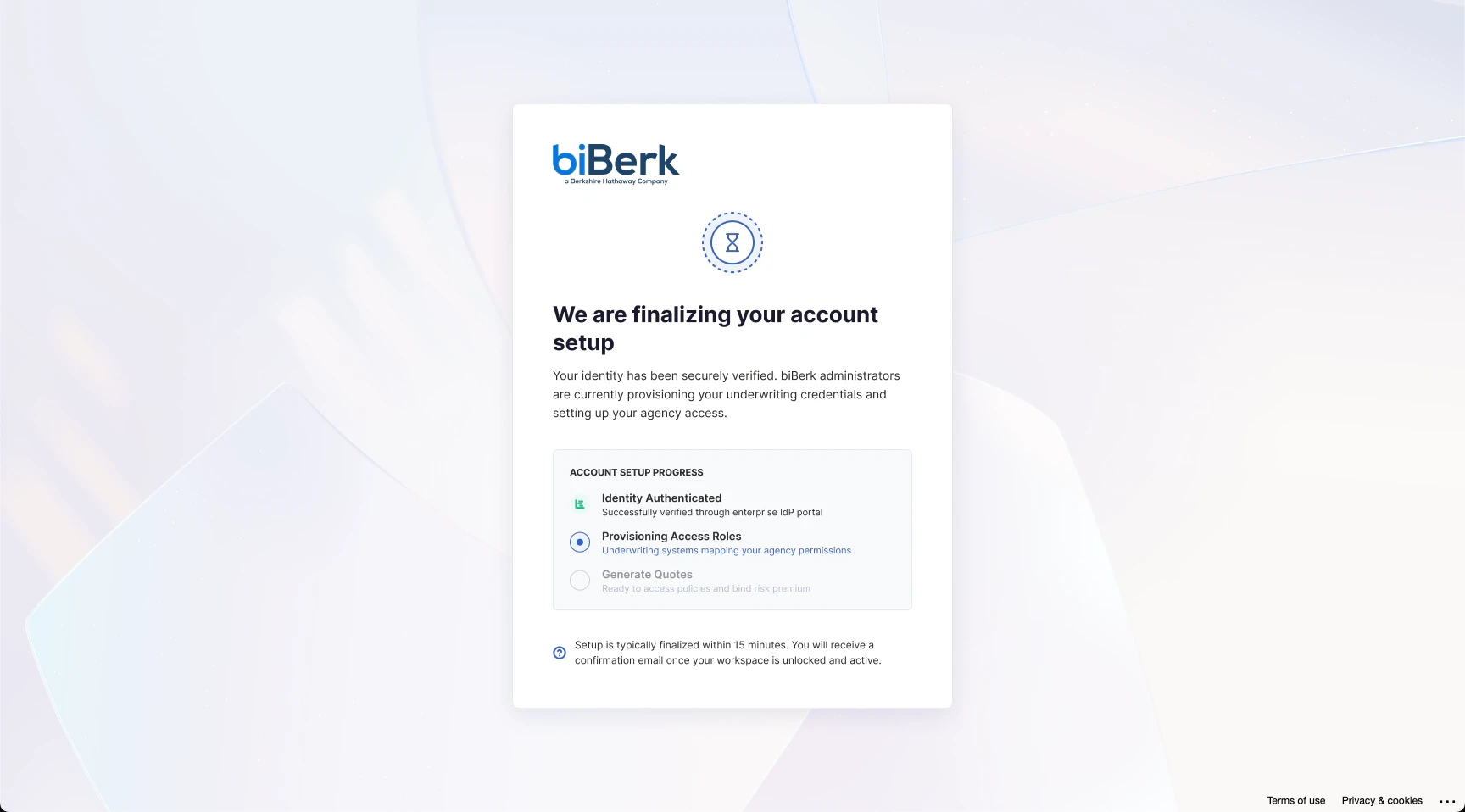
The biBERK Service Platform (BSP) overhaul was an internal-tooling initiative with a mission to eliminate manual operational labor and let the organization scale service capacity alongside rapid revenue growth. Automating internal operations meant rethinking the workflow from request intake to document delivery.
Problem identification
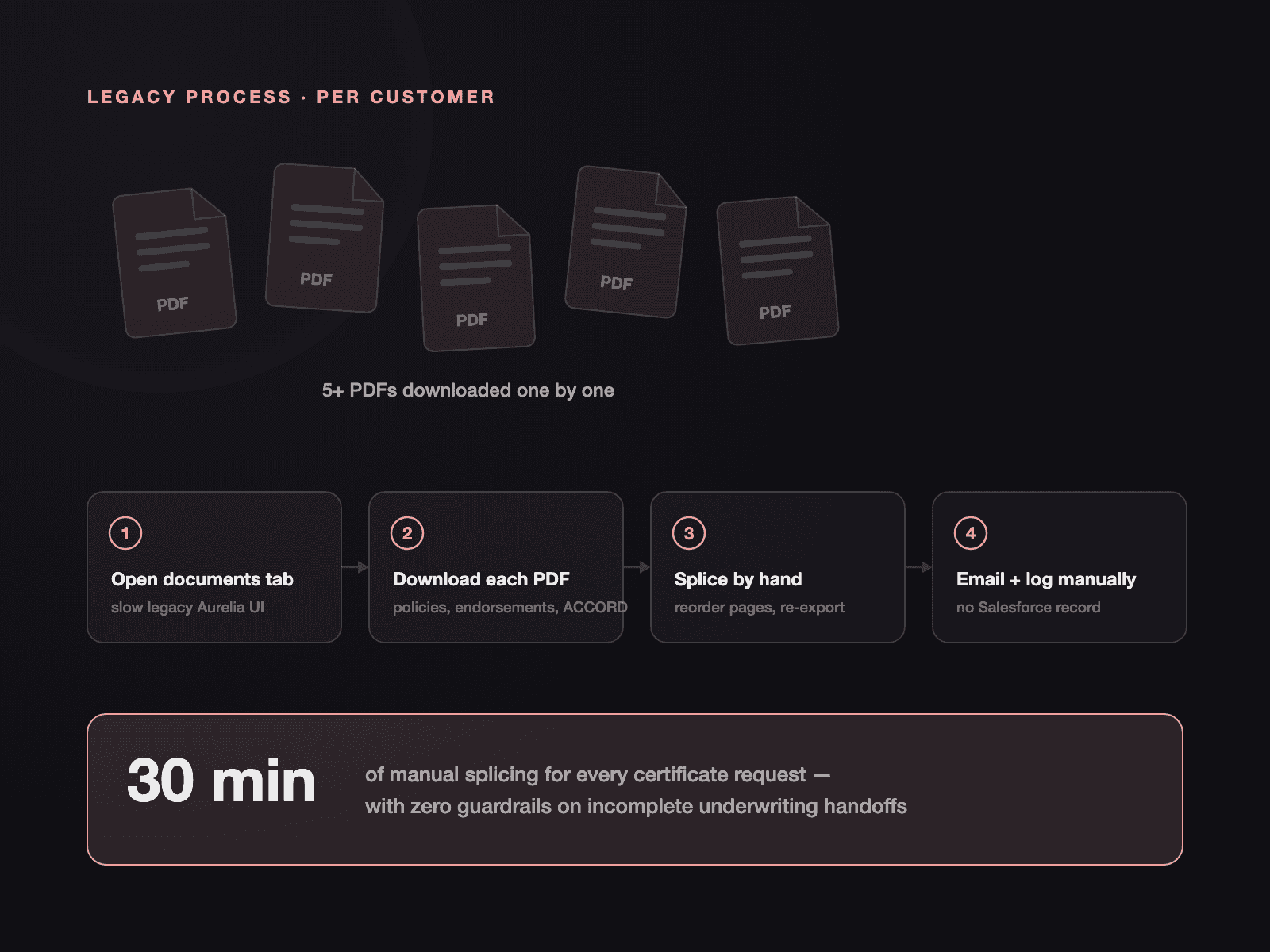
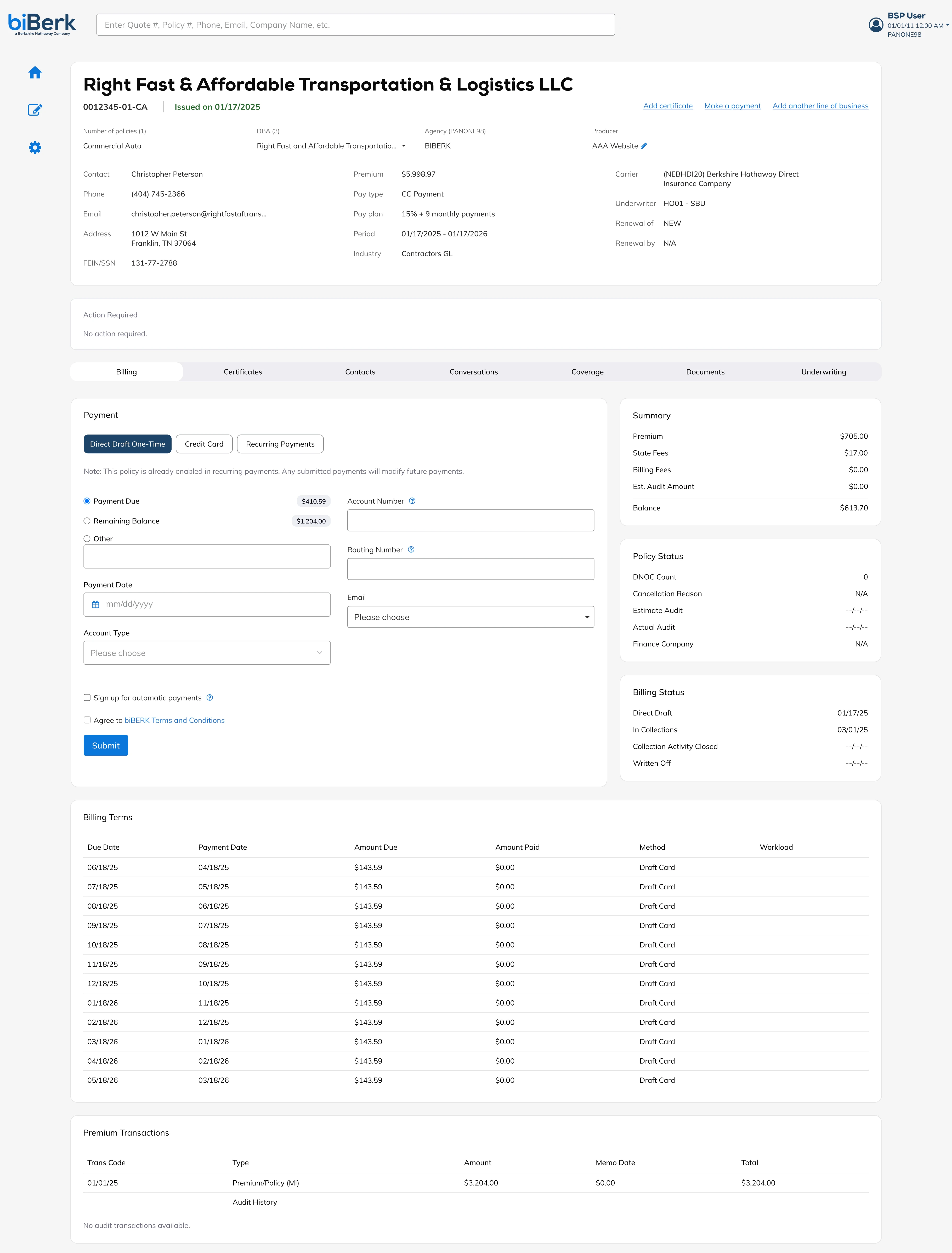
The legacy biBERK Service Platform (BSP) was an outdated internal system causing severe operational drag. Generating a routine Certificate of Insurance required representatives to navigate a slow documents tab, manually download multiple PDFs, and splice them together to include policy endorsements and ACCORD forms. This process took 30 minutes per customer. Furthermore, the system permitted representatives to forward incomplete requests to underwriting, compounding delays and limiting the company’s ability to scale hiring alongside rapid revenue growth.
of manual PDF splicing per certificate request
downloaded and spliced by hand for each customer
stopping incomplete requests from reaching underwriting
Hypothesis
We proposed that enforcing hard data requirements at intake and automating document assembly would remove the two largest sources of delay. With complete requests and one-click compilation, service reps could resolve most interactions without touching underwriting, and new hires could become productive in a fraction of the time.
Q1 2024
Audit of legacy BSP workflows
Q2 2024
Intake constraints and routing rules
Q3 2024
One-click document compiler prototype
Q4 2024
Angular migration and rollout
Solution
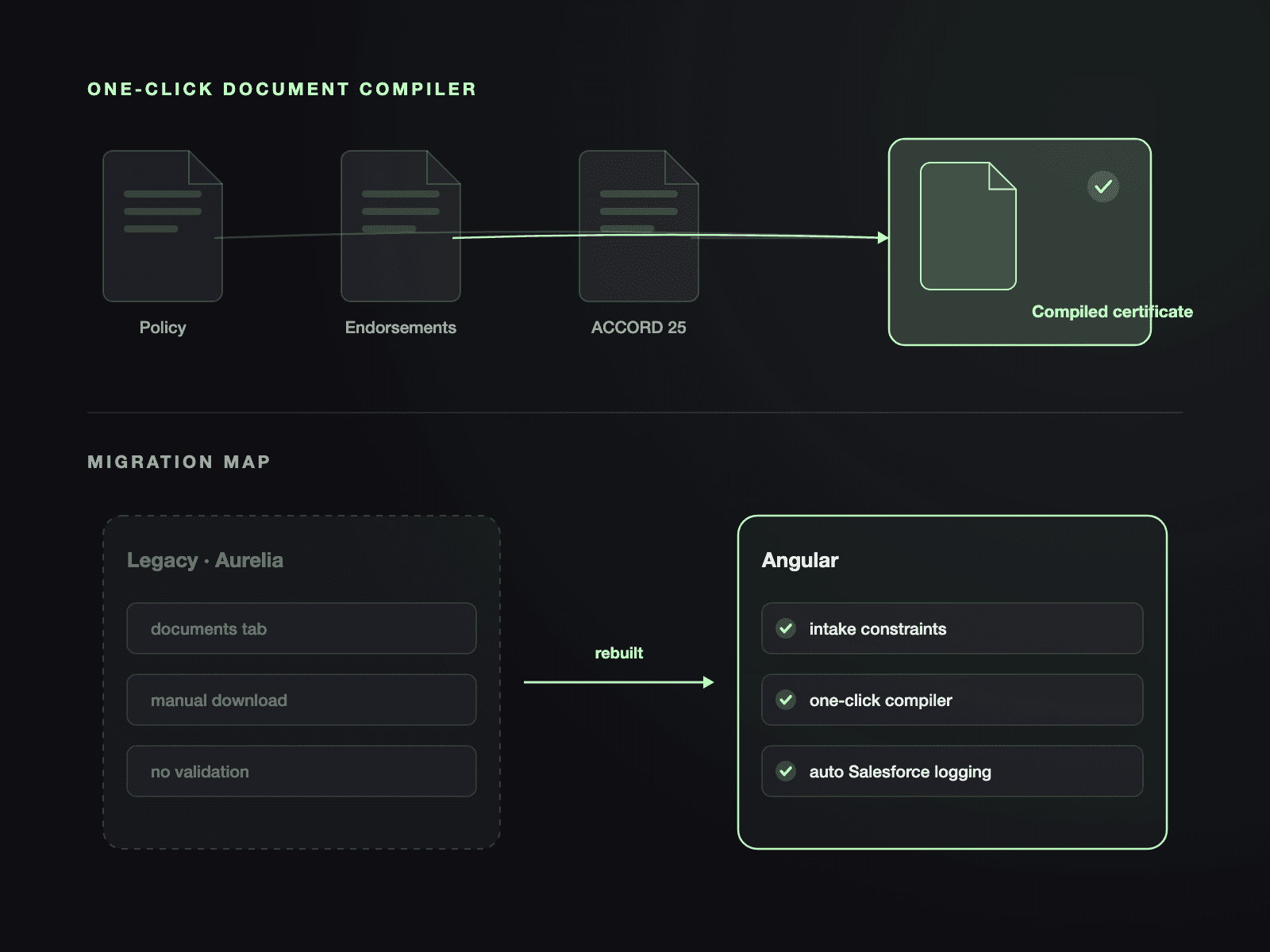
I led the UX overhaul of the internal BSP workflow, collaborating directly with front-end engineering to migrate the legacy Aurelia architecture to Angular. We implemented hard system constraints, preventing service users from routing requests to underwriting without satisfying all data requirements.
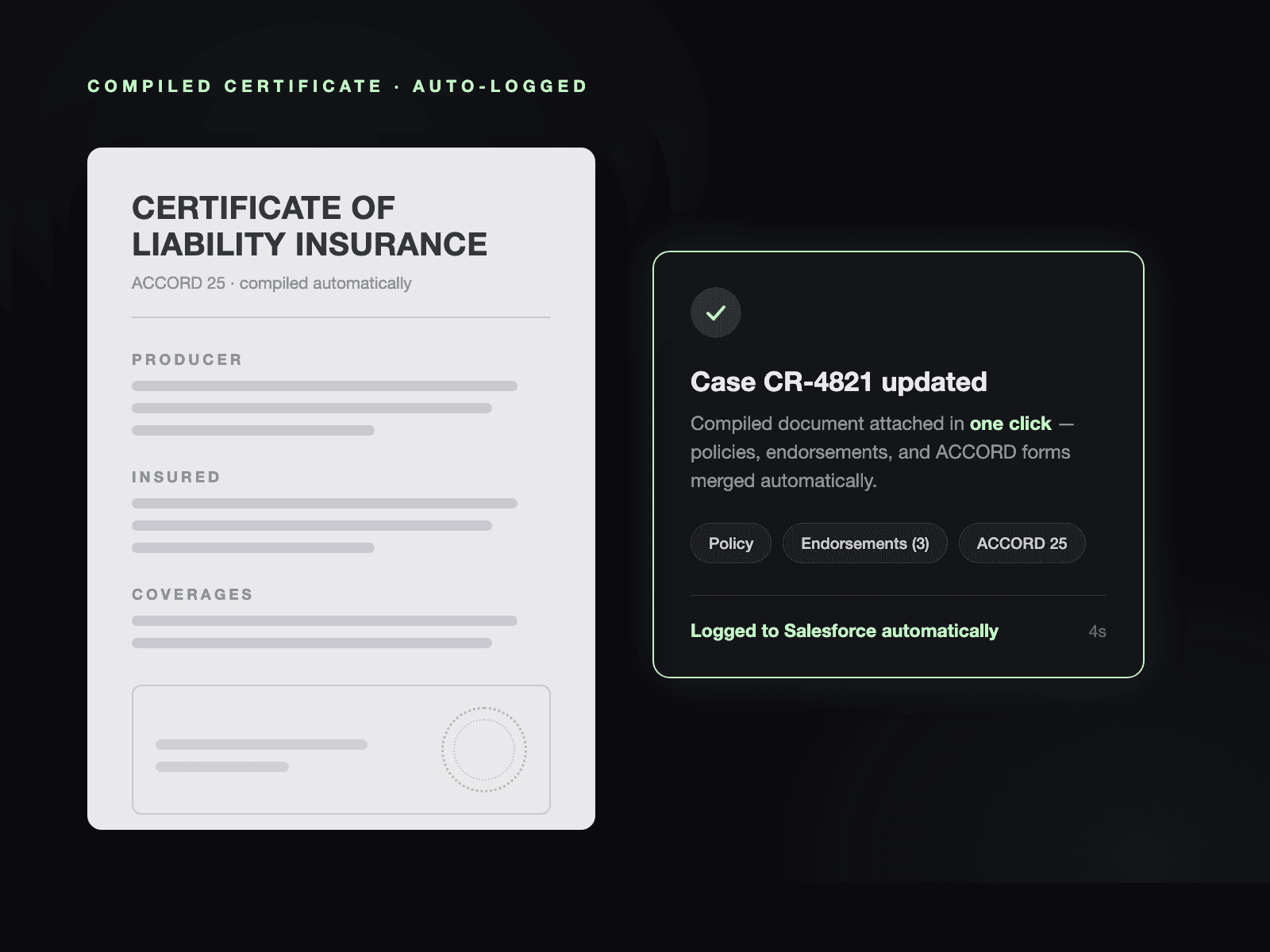
I also designed an automated document compiler that combines policies, endorsements, and ACCORD forms with a single click, logging every action in Salesforce automatically. The new Angular components stayed aligned with our high-contrast, keyboard-navigable internal design system throughout.
How it works
The redesigned platform works as a set of connected guardrails and automations. Each piece removes a manual step or a source of error, so complete requests flow from intake to compiled documents without leaving the system.
Intake constraints
Requests can’t move forward until every required field is complete.
Smart routing
Only complete, qualified requests reach the underwriting queue.
Document compiler
Policies, endorsements, and ACCORD forms merge in one click.
Salesforce logging
Every compiled document is recorded automatically, with no manual entry.
Angular migration
Legacy Aurelia screens rebuilt on a maintainable Angular architecture.
Accessible by default
High-contrast, keyboard-navigable components across the workflow.
Impact
The automated document compiler successfully eliminated 30 minutes of manual splicing labor per customer interaction. Enforcing strict data requirements before underwriting handoff cleared internal backlogs and significantly reduced employee burnout. This improved system efficiency allowed the company to train and onboard new customer service workers much faster, directly supporting the organization’s aggressive scaling targets.
30 → 0
minutes of manual splicing per customer interaction
1 click
to compile policies, endorsements, and ACCORD forms
0
incomplete requests forwarded to underwriting
100%
of compiled documents logged in Salesforce automatically
2×
faster onboarding for new customer service hires
AA
contrast and keyboard accessibility maintained throughout
My role in the team: UX design and workflow architecture, front-end collaboration on the Angular migration, accessibility standards, prototyping and testing, and rollout support for service teams.